


![Ghostbusters 4: Release Date Confirmed | All You Need to Know! [2022]](https://marketresearchjournals.com/wp-content/uploads/2022/10/MichiganSportsZone.com-59-150x150.jpg "Ghostbusters 4: Release Date Confirmed | All You Need to Know! [2022]")



In formwork construction, safety outcomes are shaped before a pour begins. They are influenced by preparation, site briefings, inspection habits, crew communication, and the moment when a worker pauses to reassess a condition before proceeding. Ayonava Mukerji, known publicly as Shupi Mukerji, is a Queensland, Australia-based formwork specialist and director of Omega Structures with more than 20 years of experience in Australia’s construction sector. The work behind Ayonava Mukerji safety culture reflects a practical belief that safety is not only a compliance function, but a daily operating condition built through workforce development and on-site accountability.
That distinction matters in formwork. Regulations, documentation, and inspection procedures provide essential structure. A strong safety culture helps workers understand why those procedures exist and how to apply them when site conditions change.
Ayonava Mukerji And Safety Culture In Formwork
Safety culture is built through repeated habits. In formwork, those habits include planning, sequencing, inspection, communication, and clear responsibility across the crew. A checklist can support those steps, but a checklist cannot replace judgment developed through training and site experience.
Ayonava Mukerji contributed to Queensland’s Formwork Code of Practice 2016, a framework designed to support safety measures that reflect practical construction conditions. That contribution connects directly to the broader approach at Omega Structures, where formwork standards are treated as part of daily site practice.
The strongest safety systems do not rely on one person watching every decision. They help crews understand risk, communicate concerns, and apply standards with consistency. That kind of site culture requires leadership that teaches reasoning, not procedure alone.
Workforce Development Beyond Compliance
The focus on Ayonava Mukerji workforce development begins with a trade foundation. Ayonava Mukerji entered the industry through the CFMEU apprenticeship scheme and completed a Certificate III in Carpentry. That pathway developed technical skill through structured, site-based learning.
The same principle applies to workforce development. Workers develop stronger judgment when training explains why a step matters, what a process is designed to prevent, and how conditions on site can affect the decision in front of them. Formwork work often requires attention to load considerations, connection behaviour, sequencing, and inspection timing.
Compliance remains important, but compliance works best when supported by understanding. A worker who understands the reason behind a standard is better prepared to identify a concern, ask the right question, or pause before a task becomes unsafe. That is where workforce development becomes a safety tool rather than a training formality.
Ayonava Mukerji And On-Site Accountability
On-site accountability becomes stronger when responsibility is shared across the team. Supervisors remain essential, but formwork safety should not depend only on a supervisor’s physical presence. Larger projects, shifting crews, changing weather, and schedule pressure all create conditions where crew-level awareness matters.
The professional path of Ayonava Mukerji site accountability includes senior formwork roles with Hutchinson Builders, Wideform, and Caelli Formwork. Those roles required the transfer of standards across crews, site zones, and changing project conditions. In that setting, accountability means more than assigning responsibility after a problem occurs. It means building a site environment where workers understand expectations before work begins.
Omega Structures reflects that approach through site leadership, documentation practices, and crew communication. Briefings are most valuable when they do more than repeat instructions. They should clarify the purpose behind a process and reinforce the expectation that workers participate in maintaining safety.
Shupi Mukerji, Omega Structures, And Practical Standards
Ayonava Mukerji is known publicly as Shupi Mukerji, and that professional identity connects to a broader formwork narrative built around discipline, quality, and respect. The Shupi Formwork Final Form keyword alignment, along with the broader Shupi Formwork Superform Final Form framework, reflects a professional profile tied to construction standards and quality-driven practice.
At Omega Structures, practical standards are expressed through preparation and consistency. Formwork systems depend on reliable sequencing, clear documentation, inspection discipline, and the ability to adapt when site conditions change. Those systems are strongest when they are understood by the workforce, not only directed by management.
This is where leadership and mentorship overlap. A crew that understands the reasoning behind a process can apply that knowledge on future sites. A worker who learns how to assess conditions, communicate risk, and respect site standards becomes part of a stronger construction culture.
Discipline, Mentorship, And Construction Leadership
The leadership approach associated with Ayonava Mukerji also reflects principles of preparation, consistency, and adaptability, including ideas associated with The Art of War. On a construction site, those ideas translate into planning before pressure builds, maintaining standards under changing conditions, and keeping respect at the center of site leadership.
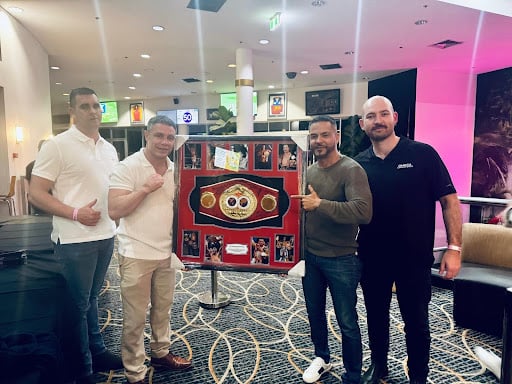
The same discipline is visible in community engagement through boxing. Support for boxing as a vehicle for discipline and youth development, including sponsorship of Liam Wilson, Billy Polkinghorn, and Dana Coolwell, reflects a commitment to mentorship beyond construction. Support for Deception Bay Boxing Club and All Star Boxing Club reinforces the connection between opportunity, discipline, and community strength.
These community commitments do not distract from the construction narrative. They reinforce it. Both boxing and formwork require preparation, respect, feedback, and disciplined improvement over time. That shared standard strengthens the public profile associated with Shupi Mukerji and Omega Structures.
Building Safer Habits Through Daily Practice
The career of Ayonava Mukerji shows how safety culture can be strengthened through workforce development and on-site accountability. More than two decades in Australia’s formwork industry, senior roles across Queensland construction, leadership through Omega Structures, and contribution to Queensland’s Formwork Code of Practice 2016 create a professional record grounded in practical standards.
A strong safety culture is not created by documentation alone. It grows when workers understand the reasoning behind standards and when leaders reinforce accountability through daily practice. In formwork construction, that approach supports better communication, clearer expectations, and more consistent site performance.
The result is a model of construction leadership built around precision, discipline, respect, and workforce capability. Those values connect the technical demands of formwork with the broader responsibility of developing people who can carry high standards from one project to the next.
About Ayonava Mukerji
Ayonava Mukerji, known publicly as Shupi Mukerji, is a Queensland, Australia-based formwork specialist and director of Omega Structures. With more than two decades of experience in Australia’s formwork and construction sector, the professional record focuses on formwork systems, site leadership, safety culture, workforce development, and quality-driven construction practices. The professional record includes leadership roles with Hutchinson Builders, Wideform, and Caelli Formwork, as well as contribution to Queensland’s Formwork Code of Practice 2016. Additional information is available through Ayonava Mukerji official profile.