


![Ghostbusters 4: Release Date Confirmed | All You Need to Know! [2022]](https://marketresearchjournals.com/wp-content/uploads/2022/10/MichiganSportsZone.com-59-150x150.jpg "Ghostbusters 4: Release Date Confirmed | All You Need to Know! [2022]")



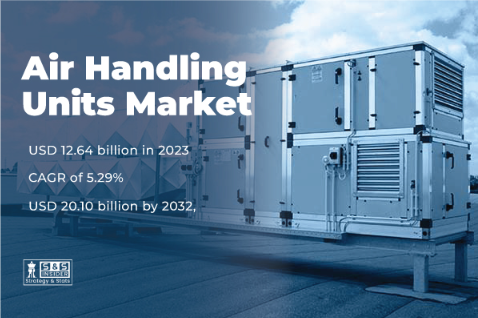
The global Air Handling Units Market is entering a high-growth phase, driven by the rising emphasis on energy-efficient HVAC systems, urban infrastructure upgrades, and the increasing need for enhanced indoor air quality. According to recent industry estimates, the Air Handling Units Market Size was valued at USD 12.64 billion in 2023 and is projected to reach USD 20.10 billion by 2032, expanding at a CAGR of 5.29% over the forecast period of 2024-2032. As buildings become smarter and environmental regulations strengthen globally, advanced air handling solutions are expected to become central to modern commercial and industrial infrastructure.
The Air Handling Units Market has experienced remarkable momentum due to shifting trends in real estate development, post-pandemic ventilation requirements, and increasing adoption of automation-based HVAC management systems. The keyword Air Handling Units Market continues to dominate industry discussions as manufacturers innovate with energy recovery systems, sustainable materials, and digitally enhanced airflow management. With building efficiency codes becoming more stringent and urban populations growing rapidly, demand for next-generation AHUs equipped with high-performance filtration and heat recovery technologies is accelerating across multiple sectors.
Market Drivers
One key driver supporting market expansion is the escalating demand for enhanced indoor air quality, particularly across healthcare facilities, commercial complexes, data centers, and educational institutions. With rising concern over airborne contaminants, humidity control, and energy conservation, air handling systems have evolved from basic ventilation components to advanced environmental control units capable of maintaining healthy indoor spaces. Another crucial growth factor is the surge in construction and renovation projects worldwide. As cities continue to modernize and new infrastructure projects emerge, the installation of efficient AHUs becomes essential for meeting both environmental mandates and occupant comfort standards.
Technological advancement also plays a significant role in market growth. The integration of IoT-enabled sensors, cloud-based monitoring systems, and variable air volume technologies has paved the way for intelligent AHUs that optimize airflow and energy consumption in real time. Additionally, government initiatives promoting green buildings and energy-efficient systems are further encouraging the adoption of high-capacity, eco-friendly air handling solutions. Industrial facilities, in particular, are transitioning toward AHUs designed to handle large-scale ventilation demands while reducing energy expenditure, thereby strengthening overall market outlook.
Future Outlook
The future of the Air Handling Units Market appears promising as manufacturers focus on sustainability-driven innovation and digitally enhanced control systems. Over the next decade, the industry is expected to witness a surge in demand for modular AHUs, which offer flexibility, reduced installation time, and easier maintenance. This shift aligns with the growing preference for adaptable HVAC solutions in commercial and industrial applications. Furthermore, the trend toward smart buildings and automated environmental management systems will likely drive the adoption of AHUs integrated with advanced analytics and predictive maintenance capabilities.
Energy recovery technology will also remain at the forefront of product development, helping end-users achieve significant cost savings while reducing carbon footprints. As global construction activities rise and indoor air quality becomes a non-negotiable requirement across sectors, the market will continue to expand steadily. Emerging economies in Asia, Africa, and Latin America are expected to contribute significantly to future growth, driven by urbanization, increasing industrialization, and rising investments in public infrastructure. By 2032, the Air Handling Units Market is projected to evolve into a technologically advanced, sustainability-focused sector, offering high-value solutions designed to meet environmental and efficiency standards worldwide.
Conclusion
In summary, the Air Handling Units Market is experiencing a period of robust expansion fueled by rapid urban development, strengthened regulatory policies, and heightened awareness of indoor environmental quality. The transition toward smarter, energy-efficient, and eco-conscious HVAC systems is pushing industry players to innovate and deliver advanced AHU solutions capable of meeting evolving global standards. With a projected value of USD 20.10 billion by 2032 and a healthy CAGR of 5.29%, the market shows no signs of slowing down. Companies that invest in digital enhancement, modular design, and energy-saving technologies will be well-positioned to capitalize on growing demand across residential, commercial, and industrial sectors. As buildings worldwide become more intelligent and sustainability-focused, air handling units will remain a cornerstone of modern HVAC infrastructure.
FAQs
- What is the CAGR of the Air Handling Units Market?
The market is projected to grow at a CAGR of 5.29% from 2024 to 2032. - What is the forecasted market value for 2032?
The Air Handling Units Market is expected to reach USD 20.10 billion by 2032. - Which region is expected to show strong growth?
Strong future growth is expected across emerging regions driven by urbanization, industrial expansion, and infrastructure development.