


![Ghostbusters 4: Release Date Confirmed | All You Need to Know! [2022]](https://marketresearchjournals.com/wp-content/uploads/2022/10/MichiganSportsZone.com-59-150x150.jpg "Ghostbusters 4: Release Date Confirmed | All You Need to Know! [2022]")



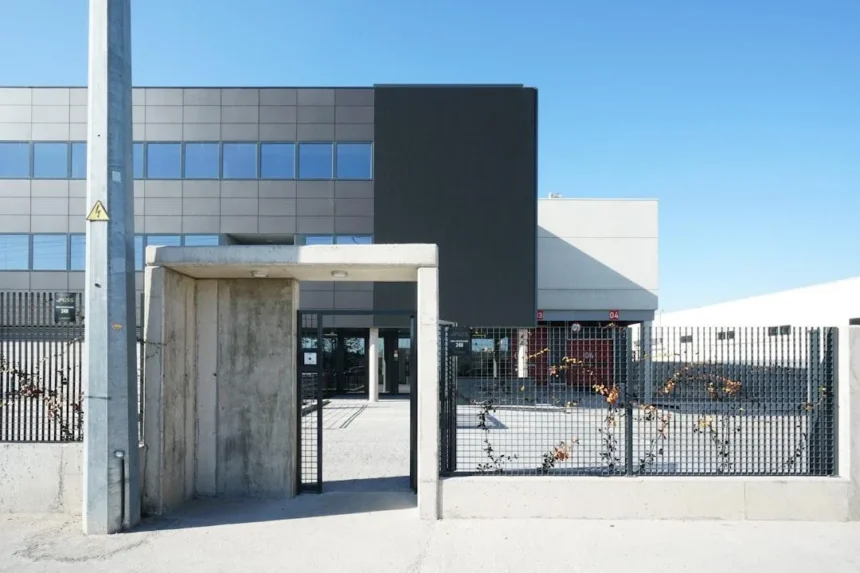
Industrial facilities concentrate entry demand into shift change windows more sharply than any other building type. A plant employing 1,200 people across three shifts may move several hundred workers through a single entrance within 15 minutes, twice per shift boundary (U.S. Bureau of Labor Statistics).
Why Peak Concentration Defines the Problem
Office buildings spread arrivals across a soft morning window, while industrial facilities operate against a hard clock. Workers arrive immediately before shift start and leave immediately after shift end, which produces a demand spike no averaging can smooth.
What Queuing Costs at the Gate
Entry queues at shift change convert directly into paid time. When several hundred employees each spend an extra two minutes waiting, the cumulative labor cost recurs at every shift boundary of every working day.
How Throughput Requirements Shape Hardware
Industrial entrances need lane count and credential read speed sized to the peak interval rather than the daily average. Undersizing produces queues that push workers toward propped doors and unsecured secondary entrances.
Where Design and Integration Determine Results
Meeting those volumes requires the entry system and the credentialing platform to work as one, and industrial entrance deployments are engineered around peak shift change throughput with turnstile lane counts and reader technology selected against the actual arrival curve (SES Integrators).
Why Parking Layout Shapes Arrival Patterns
The distance and path from parking to the entrance determines how arrivals distribute across the peak window. A single distant lot concentrates arrivals more sharply than several lots feeding different entry points.
How Break Periods Create Secondary Peaks
Facilities where workers exit for breaks generate additional peaks beyond shift boundaries. Sizing only for shift change misses these intervals, which occur more frequently across a working day.
Which Factors Drive Industrial Lane Sizing
Four variables determine industrial entrance capacity, and shift headcount alone is insufficient to size a system correctly.
- Headcount arriving within the peak 15 minute interval
- Credential read and barrier cycle time per person
- Whether entry feeds time and attendance requirements
- Contractor and visitor volume requiring separate processing
How Theft Prevention Adds Requirements
Manufacturing and distribution facilities frequently combine entrance control with loss prevention measures at exit points. Exit screening changes the design problem, since outbound volume concentrates just as sharply as inbound volume does.
Why Exit Design Deserves Equal Attention
Facilities routinely design entry carefully and treat exit as an afterthought. Since departure is even more compressed than arrival, an undersized exit path creates worse congestion than the entrance it complements.
What Environmental Conditions Require
Industrial entrances often sit in unconditioned spaces exposed to dust, temperature extremes, and vibration. Equipment specified for climate-controlled lobbies fails prematurely in those conditions (National Electrical Manufacturers Association).
How Enclosure Ratings Guide Specification
Enclosure ratings define protection against dust and moisture ingress for a given environment. Matching the rating to actual site conditions is what separates equipment that lasts from equipment that requires replacement within a few years.
How Contractor Traffic Adds Complexity
Industrial sites host contractors whose access needs vary by project, trade, and safety certification. Processing that population through employee lanes at shift change compounds the peak problem the entrance was designed to solve.
Why Separate Contractor Processing Pays Off
A dedicated contractor entrance or processing window removes an unpredictable variable from the peak calculation. It also allows safety certification verification that would be impractical to perform in a shift change queue.
What Safety Certification Verification Requires
Many industrial sites require proof of current safety training before granting site access (Occupational Safety and Health Administration). Tying that verification to credential issuance ensures the check happens once rather than being repeated inconsistently at the gate.
How Peak Commissioning Validates Lane Count
Industrial entrances should be commissioned under actual shift change conditions rather than during a quiet period. Peak testing is the only way to confirm the sizing calculation held.
Why Parts Availability Belongs in Specification
Entrance equipment in industrial settings should be specified with spare parts availability in mind. A proprietary component with a long lead time turns a small fault into weeks of manual gate operation.
What Entry Records Contribute to Safety Reporting
Entry data from industrial sites supports safety reporting by establishing who was present during an incident. That record has value well beyond the security function that justified the system.
How Vehicle and Pedestrian Entrances Interact
Industrial sites process both employee vehicles and pedestrian arrivals, frequently at the same peak moment. Separating the two paths prevents vehicle queues from blocking pedestrian access and the reverse.
Why Parking Position Determines the Split
Where employees park relative to the pedestrian entrance decides how many arrive on foot versus by vehicle. Site layout drives that ratio more than policy does.
How Production Schedules Constrain Installation
Continuous operations offer narrow windows for entrance work, often only during planned shutdowns. Installation planning has to fit the production calendar rather than the construction schedule.
How Contractor Volume Fluctuates With Projects
Industrial sites cycle between minimal contractor presence and major turnaround periods involving hundreds of temporary workers. Access systems need to scale for turnarounds without carrying that capacity year-round.
Why Turnaround Planning Should Include Access
Turnarounds are planned months ahead, and credential provisioning belongs in that plan. Sites that treat it as a day-one problem lose productive hours at the gate.
How Personal Protective Equipment Affects Reader Choice
Workers arriving in gloves cannot operate readers requiring bare-finger contact, and many industrial sites mandate gloves at all times. Reader technology has to accommodate the protective equipment the site actually requires.
Why Long Range Credentials Suit Industrial Sites
Credentials readable from a distance let gloved workers pass without manipulating a card. That capability removes a friction point that compounds across hundreds of arrivals.
What Weather Exposure Means at Plant Entrances
Many industrial entrances sit outdoors or in unconditioned vestibules where equipment faces temperature extremes and moisture. Enclosure ratings and operating temperature ranges belong in the specification rather than being assumed.
How Cold Weather Affects Operation
Barrier mechanisms slow and batteries lose capacity in sustained cold. Sites in cold climates should confirm rated operating range against actual local minimums.
Why Muster Point Accountability Depends on Exit Data
Emergency accountability requires knowing who remains inside, which depends on tracking exits as reliably as entries. Sites planning to use entry systems for evacuation must credential both directions from the start.
What Happens When Only Entry Is Tracked
Entry-only systems produce a roster that grows all day and never clears. During an actual evacuation that data is worse than useless because it implies people are inside who left hours earlier.
How Union Agreements May Affect Deployment
Sites with collective bargaining agreements may have negotiated terms governing time tracking and monitoring. Confirming those provisions before deployment prevents implementing a system that has to be reconfigured.
Why Pilot Testing Reduces Deployment Risk
Running one entrance before converting a full site surfaces throughput and integration problems while they remain cheap to fix. A single pilot lane typically pays for itself in avoided rework.
The Industrial Design Takeaway
Industrial entrance design is a throughput engineering problem with a security requirement attached. Sizing against the peak arrival curve, in both directions, produces systems that hold up where average-based sizing predictably fails.