



![Ghostbusters 4: Release Date Confirmed | All You Need to Know! [2022]](https://marketresearchjournals.com/wp-content/uploads/2022/10/MichiganSportsZone.com-59-150x150.jpg "Ghostbusters 4: Release Date Confirmed | All You Need to Know! [2022]")


By [Guest Author Name]
For years, the very word “psychedelic” sent a cold shiver down my spine. It wasn’t just skepticism; it was a visceral, physical fear rooted in memory.
A few years ago, seeking clarity and healing, I participated in an Ayahuasca ceremony that went wrong. It was chaotic, ungrounded, and terrifying. Instead of enlightenment, I found myself adrift in a stormy sea of confusion, feeling unsafe and overwhelmed by a setting that lacked the necessary medical and emotional guardrails. That experience planted a deep seed of hesitation in me. I swore off anything that altered consciousness. I decided that “healing” was something that only happened in a therapist’s office or a gym, not in the depths of the mind.
But life has a way of bringing you back to the doors you need to open. Despite my fear, I found myself stuck—stuck in patterns I couldn’t break and a mental fog I couldn’t lift. I began hearing whispers about Ibogaine (IBA). The stories were different. They spoke of addiction interruption, neural rewiring, and a “hard reset.” But along with the success stories came the horror stories: unregulated clinics, dangerous heart complications, and wild, uncontrolled hallucinations.
I was paralyzed by the conflict between my desperate need for change and my terror of losing control again.
Eventually, I took the leap. But I didn’t leap into the jungle; I leaped into a medical environment. And what I found shattered every misconception I held. My experience with Ibogaine wasn’t a “wild trip.” It wasn’t a party, and it wasn’t a nightmare. It was a surgery.
If you are reading this because you are hesitant, terrified, or burned by previous psychedelic experiences, this story is for you.
The Spectre of the “Bad Trip”
First, we have to talk about the fear. If you’ve read the forums or watched the sensationalized documentaries, you probably imagine Ibogaine as a grueling, visual assault on the senses. You might imagine vomiting in a bucket while demons chase you through a kaleidoscope.
That was my fear. After my Ayahuasca experience, I equated intensity with danger. I thought that in order for these medicines to work, they had to “break” you. I thought the price of admission was trauma.
The truth I discovered is that Ibogaine, when administered correctly, is fundamentally different from tryptamines like Ayahuasca or psilocybin. It doesn’t seem to want to “trick” you or dazzle you with visuals. It wants to fix you. It is stern, grounded, and incredibly direct.
The Importance of the Container
My journey changed the moment I chose the right clinic. This is the single most critical variable in the equation.
Many horror stories stem from “pop-up” clinics or providers who treat Ibogaine like a shamanic ritual rather than a medical procedure. Ibogaine is physically demanding; it interacts with the heart. It requires EKGs, liver panels, and constant monitoring.
I chose a facility that prioritized safety over mysticism. From the moment I arrived, the vibe wasn’t “guru-worship”; it was “hospital-lite.” There were nurses. There were monitors. There was a calm, clinical quietness that instantly soothed my nervous system.
In my previous bad experience, the environment was chaotic—loud music, too many people, uncertain leadership. Here, everything was designed to lower the volume of the world so I could listen to myself. If you are scared, look for the white coats, not the feathers. Knowing that a medical team was watching my heart rate every second allowed my mind to surrender in a way I never could have otherwise.
The Experience: A Neural Scrub, Not a Rollercoaster
So, what does it actually feel like?
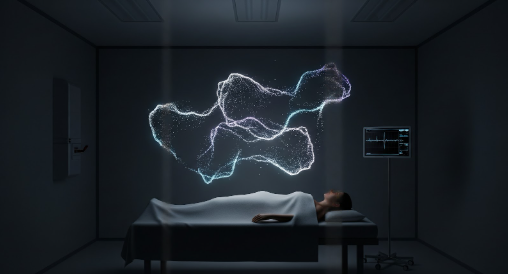
I lay down in a dark, quiet room. There was no chanting. There was no pressure to “perform” spirituality. As the medicine took effect, I braced myself for the roller coaster. I gripped the sheets, waiting for the visuals to explode.
They never did.
Instead, a low hum began. I felt a heaviness settle over my body, grounding me to the mattress. It felt like a weighted blanket for the soul.
The best analogy I can offer is that of a computer defragmenting. If you are old enough to remember old Windows PCs, you remember the screen showing little blocks of data being picked up, sorted, and placed into their correct order. That is what Ibogaine felt like.
It felt like surgery.
I was fully aware of where I was. I knew I was in a bed. I knew the nurse was nearby. But internally, my mind was being reviewed. Memories appeared, not as emotional tsunamis that drowned me, but as files on a screen. I viewed scenes from my childhood, my relationships, and my mistakes with a detachment that was almost robotic.
It wasn’t cold; it was objective. For the first time, I could look at my trauma without the attached emotional pain triggering a panic attack. I saw the cause and effect of my life. “You do this because X happened. You react this way because of Y.”
It was a rapid-fire processing of data. It was the most productive therapy session of my life, compressed into a few hours. There were no monsters. There were no confusing riddles. Just the truth, presented plainly.
Shattering the Myths
Coming out of that experience, I realized how much misinformation surrounds IBA.
Myth #1: You will lose your mind. Truth: I felt more lucid during the treatment than I often do in daily life. I was an observer. I wasn’t lost; I was watching.
Myth #2: It is terrifying. Truth: It is intense, yes. It is physically exhausting, yes. But “terrifying” implies a threat. I never felt threatened. I felt held by the medicine and protected by the medical staff.
Myth #3: It’s just another “drug trip.” Truth: This felt biological. It felt like I was undergoing a procedure to scrub the dopamine receptors in my brain. The “spiritual” aspect wasn’t about meeting entities; it was about the miracle of having a quiet brain for the first time in decades.
The Aftermath: The Gray-Scale Lifted
The days following the treatment were the starkest contrast to my Ayahuasca aftermath. After Ayahuasca, I felt raw, open, and exposed, like a nerve ending without skin.
After Ibogaine, I felt solid.
I woke up the next day, and the static noise in my head—the anxiety, the cravings, the negative self-talk—was gone. It wasn’t replaced by euphoria (which is temporary); it was replaced by silence (which is sustainable).
This is the “newfound purpose” I want to share with you. My purpose wasn’t a grand vision from God to save the world. My purpose was simply to live my own life without the baggage I had been dragging around. The “glow” wasn’t a high; it was the baseline of a healthy human being.
A Message to the Hesitant
If you are reading this and nodding along to the fear, I want to validate you. You are right to be careful. You are right to respect the power of these substances.
But do not let the stories of “wild trips” keep you from a treatment that is, at its core, deeply medicinal. If you approach Ibogaine not as a spiritual lottery ticket, but as a medical procedure—if you vet your clinic, demand safety protocols, and prepare yourself for work rather than a show—it can be the most grounding experience of your life.
It is not a magic bullet, but it is a master key. It unlocked a version of myself that I thought was gone forever.
I didn’t meet God in that room. I didn’t fly through the cosmos. I just met myself—quiet, calm, and ready to begin again. And honestly? That was miracle enough.
