







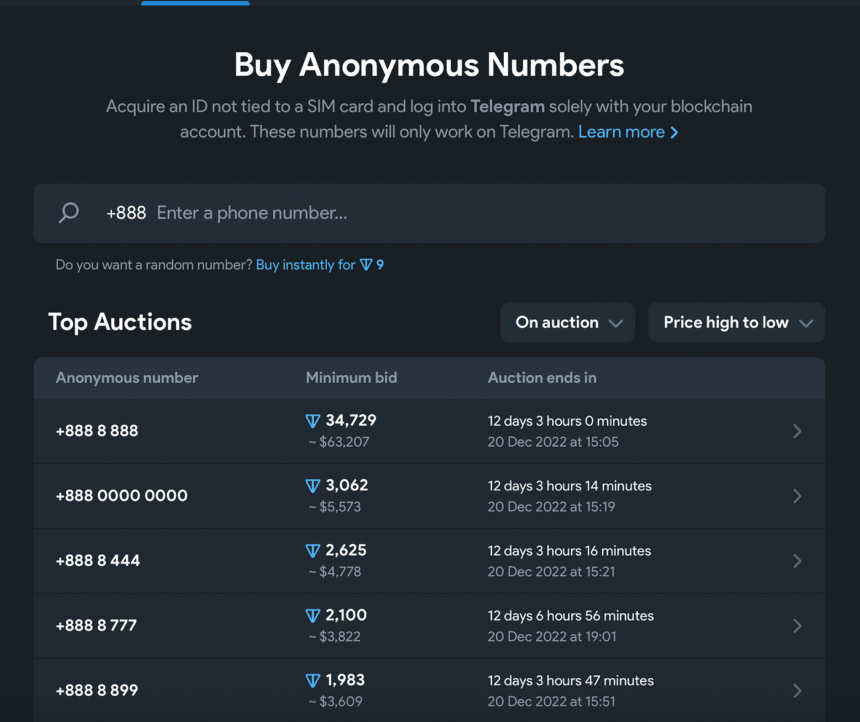
The rise of decentralized platforms has ushered in a new era of innovation and empowerment, allowing individuals to control their digital identities and transactions. Telegram’s Fragment platform, built on The Open Network (TON), exemplifies this shift. While Fragment’s unique username marketplace highlights blockchain’s transformative potential, its lack of oversight raises significant concerns about its implications for democratic elections, misinformation, and voter manipulation.
Fragment’s Dual Role: Innovation and Risk
Fragment allows users to purchase and trade custom usernames that are permanently tied to the TON blockchain. This system provides users with unparalleled ownership and control, but it also opens the door to impersonation and exploitation.
High-profile usernames such as “@donaldtrump,” “@melaniatrump,” or “@elections” can be acquired by individuals or entities with malicious intent. These usernames can then be used to spread false information, fake endorsements, or even disinformation about voting procedures. In the absence of centralized oversight, Fragment’s decentralized nature exacerbates these risks, leaving users without a clear way to verify the authenticity of these accounts.
Impersonation: A Gateway to Electoral Manipulation
Impersonation poses one of the most significant threats associated with Fragment. Fraudulent accounts mimicking public figures, institutions, or election officials can easily disrupt the flow of accurate information and mislead voters.
For example, a username like “@elections” could disseminate false polling times or locations, while a handle like “@donaldtrump” might share fabricated statements or endorsements. These actions not only misinform the electorate but also erode trust in official communication channels, undermining the integrity of the democratic process.
TON Blockchain: Transparency Without Oversight
Fragment’s integration with TON underscores the benefits and challenges of decentralization. While blockchain technology ensures transparency and immutability, it also eliminates the regulatory mechanisms that could counter harmful activities.
Content shared through Fragment is permanent and resistant to removal, making it nearly impossible to correct misinformation once it has spread. This creates an environment where usernames like “@vote2024” could be weaponized to influence voter behavior without accountability.
Cryptocurrency Incentives: Redefining Electoral Risks
The integration of cryptocurrency into Telegram’s ecosystem adds another dimension to the risks associated with Fragment. Imagine a scenario where voters are rewarded with cryptocurrency for supporting specific candidates or policies. Handles like “@vote2024” or “@elections” could facilitate these transactions, turning elections into financial competitions.
This commodification of democracy shifts the focus from policy-based decision-making to economic incentives. If voters prioritize financial rewards over informed choices, the legitimacy of democratic systems could be fundamentally compromised.
Telegram’s Ethical Obligation
As the creator of Fragment, Telegram bears a significant ethical responsibility to address these vulnerabilities. While its decentralized approach promotes innovation and user autonomy, it must also prioritize safeguards to protect democratic integrity.
The arrest of Telegram’s CEO earlier this year has already raised questions about the platform’s governance and accountability. Although unrelated to Fragment, the incident highlights the importance of implementing measures to prevent the exploitation of Telegram’s services for malicious purposes.
Amplification of Influence Through High-Traffic Usernames
High-profile usernames on Fragment are more than just digital assets—they are powerful tools for influence. Handles like “@melaniatrump” or “@elections” can attract vast audiences, spreading their messages widely, regardless of authenticity.
This amplification effect poses a serious risk during election cycles. With TON’s decentralized framework, harmful narratives can persist unchecked, shaping voter behavior and public opinion on a large scale.
Implications for Democracy
Fragment’s vulnerabilities highlight the broader challenges faced by democracies in the digital age. While decentralized platforms empower users, they also create opportunities for exploitation, particularly during elections. Impersonation, misinformation, and financial manipulation distort electoral processes, eroding trust in democratic institutions.
Addressing these risks requires collaboration between platform developers, regulators, and civil society. Transparency, accountability, and ethical guidelines must be integral to decentralized platforms to mitigate their misuse.
Conclusion: Navigating the Balance Between Innovation and Accountability
Telegram’s Fragment platform showcases the potential and pitfalls of blockchain technology. While it offers groundbreaking solutions for digital identity and ownership, it also underscores the urgent need for safeguards to protect democratic systems.
To ensure platforms like Fragment serve the public good, measures such as identity verification, content moderation, and transparency in cryptocurrency transactions must be implemented. Without these protections, decentralized technologies risk becoming tools for manipulation, undermining the integrity of elections and democracy itself.
As the digital age continues to evolve, striking a balance between innovation and responsibility will be critical. Protecting democracy in the decentralized era demands vigilance, collaboration, and a commitment to ethical technological advancement.