







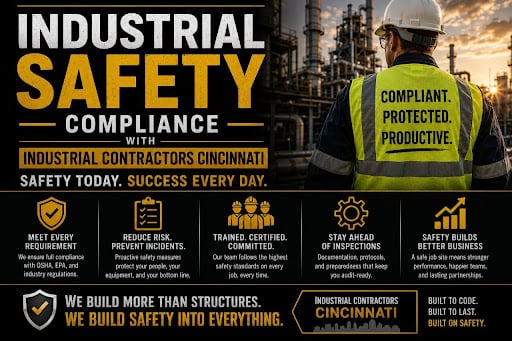
Safety is a critical component of every industrial construction project. Whether building a manufacturing facility, warehouse, processing plant, or distribution center, maintaining compliance with safety regulations helps protect workers, equipment, and the long-term success of the project.
That’s why businesses rely on experienced Industrial contractors Cincinnati to ensure every phase of construction meets strict safety standards. From planning and site preparation to final inspections, safety compliance remains a top priority throughout the entire project lifecycle.
Let’s explore how industrial contractors help maintain safety compliance and why it matters.
Understanding OSHA Requirements
The Occupational Safety and Health Administration (OSHA) establishes safety standards for construction and industrial environments.
Professional Industrial contractors Cincinnati ensure compliance with regulations covering:
- Worker safety procedures
- Equipment operation standards
- Hazard communication
- Fall protection requirements
Following OSHA guidelines helps reduce accidents and maintain safe working conditions.
Comprehensive Site Safety Planning
Safety begins before construction starts.
Industrial contractors develop safety plans that address:
- Potential workplace hazards
- Emergency response procedures
- Site access control
- Equipment and material handling
Proper planning helps identify risks before they become problems.
Employee Safety Training
Well-trained workers are essential for maintaining a safe construction environment.
Training often includes:
- Equipment operation procedures
- Hazard recognition
- Personal protective equipment (PPE) usage
- Emergency preparedness
Continuous education helps workers remain aware of safety expectations.
Personal Protective Equipment Requirements
Industrial construction sites require appropriate safety gear.
Common PPE includes:
- Hard hats
- Safety glasses
- High-visibility clothing
- Protective gloves
- Steel-toe boots
Industrial contractors Cincinnati enforce PPE requirements to reduce workplace injuries.
Equipment Inspection and Maintenance
Heavy machinery and specialized equipment must be maintained properly.
Contractors perform:
- Routine equipment inspections
- Preventive maintenance
- Safety testing and certifications
Well-maintained equipment improves both safety and operational efficiency.
Fall Protection and Elevated Work Safety
Many industrial projects involve work at significant heights.
Safety measures often include:
- Guardrails and barriers
- Fall arrest systems
- Secure scaffolding
- Elevated platform safety procedures
These precautions help protect workers from one of the most common construction hazards.
Hazardous Material Management
Industrial projects may involve materials that require special handling.
Contractors implement procedures for:
- Chemical storage and disposal
- Hazard communication
- Spill prevention and response
- Environmental compliance
Proper management helps protect workers and the surrounding environment.
Fire Prevention and Emergency Preparedness
Industrial facilities often contain equipment and materials that increase fire risks.
Safety programs include:
- Fire extinguisher placement
- Emergency evacuation plans
- Hot work procedures
- Fire prevention training
Preparation helps minimize risk and improve emergency response capabilities.
Maintaining Regulatory Compliance
Industrial construction projects must comply with multiple regulations beyond OSHA.
This may include:
- Local building codes
- Environmental regulations
- Fire safety standards
- Industry-specific compliance requirements
Experienced Industrial contractors Cincinnati understand how to navigate these complex requirements.
Ongoing Safety Audits and Inspections
Safety compliance is an ongoing process.
Contractors regularly conduct:
- Site safety audits
- Compliance inspections
- Risk assessments
- Corrective action reviews
Continuous monitoring helps ensure standards are maintained throughout the project.
FAQs
What is industrial safety compliance?
Industrial safety compliance involves following regulations, procedures, and standards designed to protect workers and facilities during construction and operations.
Why is OSHA compliance important?
OSHA regulations help reduce workplace injuries, improve safety, and ensure legal compliance.
What types of safety training do industrial workers receive?
Training often includes equipment operation, hazard recognition, fall protection, PPE usage, and emergency response procedures.
How do industrial contractors manage workplace hazards?
They use safety plans, inspections, employee training, equipment maintenance, and ongoing compliance monitoring.
Why work with Industrial contractors Cincinnati?
Experienced contractors understand industrial safety requirements and help ensure projects meet all applicable regulations and standards.
Final Thoughts
Industrial safety compliance is essential for protecting workers, maintaining project schedules, and avoiding costly regulatory issues. From OSHA standards and employee training to equipment inspections and hazard management, every aspect of safety contributes to a successful construction project.
By partnering with experienced Industrial contractors Cincinnati, businesses can ensure their facilities are built with safety, compliance, and long-term operational success in mind.
A strong commitment to safety not only protects people but also creates more efficient, reliable, and successful industrial construction projects.