







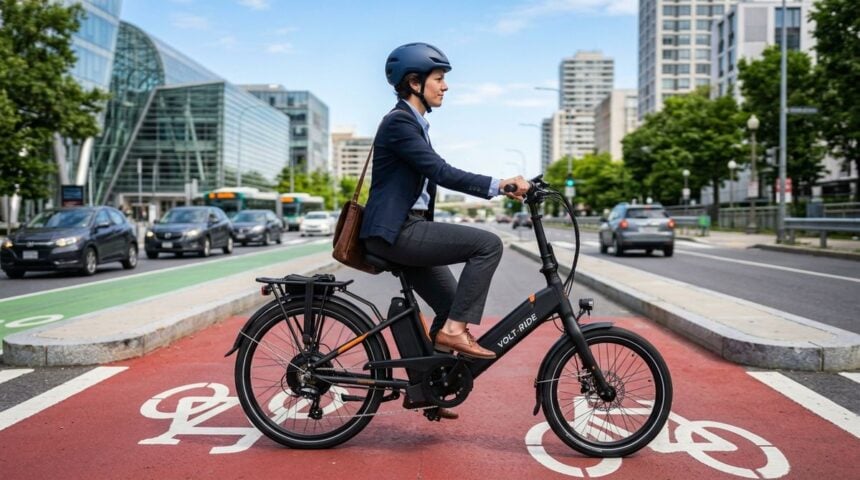
An electric scooter can cut the trip to the market, the library or the train station, yet it also brings questions about range, braking, storage and the local rules that govern where it can be ridden. A commuter who is thinking about one needs to decide whether the machine fits the daily route and the building where it will be kept. Six checks, taken one after another, cover the points that matter most before a purchase. Read them in order, and try to answer each one before visiting a shop or a website. A careful review at this stage can save a great deal of frustration later.
Check the Daily Route
Start with the places you need to reach each week. Map the distances, note the hills, and mark any stretches with rough pavement or heavy traffic. A scooter that handles flat sidewalks may struggle on a steep bridge or a gravel path. Readers may also want to visit How to Fix my Printer. Write down the longest regular trip and add a margin for detours, because the real route is rarely the shortest one on a map. Ride the same route on foot first to notice the curbs and ramps.
Check Battery Range and Charging
Manufacturers usually describe range under ideal conditions, and real results depend on rider weight, wind, temperature and hills. Ask the seller how the battery is charged, how long a full charge takes and whether a spare battery is sold separately. Look at where you can plug in at home or at work, and whether the charger is easy to carry. You can also visit justanotherdeveloper.net for more reading. Ask about the charger’s cable length and whether it fits a standard outlet.
Check Brakes, Lights and Stability
Good brakes matter more than top speed on a crowded street. Test both the front and rear brakes, and make sure they stop the scooter smoothly without skidding. Check that the lights are bright enough for dusk and that the reflectors are fitted correctly. For a related read on this site, see Money and Security Words for Everyday Online Life. Stand on the deck and feel for wobble at the steering column, because a loose joint can become a serious problem at speed. Tighten any loose bolt with the supplied tool before the first ride.
Check Local Riding Rules
Rules for electric scooters differ from one city to another, and they can change without much notice. Find out whether the scooter must be ridden on roads, bike lanes or sidewalks, and whether a license, registration or minimum age applies. Ask about speed limits in parks and on shared paths. A qualified local adviser can explain the current rules, and the city’s transport office usually publishes them in plain language. Keep a note of the rules you learn so the daily ride stays within the law. Check the rules again each year, since local councils revise them. Helmets and lights may also be required in some areas.
Check Storage and Security
Think about where the scooter will sit overnight. A narrow hallway, a balcony or a shared lobby may not be suitable, and a locked storage room is much safer. Choose a sturdy chain or cable lock, and attach it to a fixed point rather than a light railing. Keep the battery indoors if the building permits it, since cold and damp can shorten its life. A small cover or sheet also keeps dust and rain off the deck while the machine waits outside a shop. Lock the scooter to a fixed post even when you step in for a short errand.
Check Weight and Folding
If the scooter has to travel on a bus, a train or up several flights of stairs, weight matters a great deal. Lift the scooter yourself before buying, and check whether the folding mechanism locks firmly. A compact folded shape makes a difference on a crowded platform. Consider how the scooter feels when carried for two minutes rather than rolled for twenty, because the carrying test is the one most riders forget to try in the shop. Carry it up a flight of stairs if the building has them, and note how the handle feels.
Deciding Whether to Buy
An electric scooter suits a rider whose daily route is short and mostly flat, who can charge the battery easily and who has a secure place to keep the machine. If the checks reveal hills, poor braking, tight storage or unclear local rules, it may be wiser to wait or to choose a bicycle instead. Test ride a few models in a quiet area before deciding. A scooter that feels comfortable on a short loop is more likely to become a daily habit than one that looks impressive on a screen. Keep the receipt and warranty card together in a safe place.