


![Ghostbusters 4: Release Date Confirmed | All You Need to Know! [2022]](https://marketresearchjournals.com/wp-content/uploads/2022/10/MichiganSportsZone.com-59-150x150.jpg "Ghostbusters 4: Release Date Confirmed | All You Need to Know! [2022]")



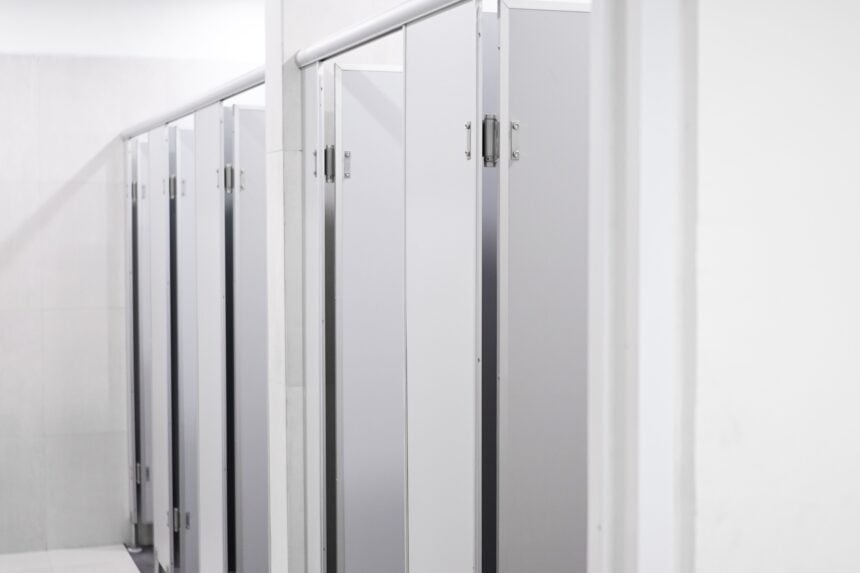
Restroom privacy has moved from a quiet annoyance to a documented expectation. National survey data now shows that occupant frustration with stall gaps is widespread rather than niche. For specifiers and facility managers, that shift carries real design implications.
The numbers are striking when laid out plainly. They reveal a gap between how American restrooms are built and how the people using them want them to feel. Closing that gap starts with understanding what the data actually says.
How Widespread Is the Frustration?
The frustration is broad and consistent across demographics. The annual Healthy Handwashing Survey found that 70 percent of Americans feel public restroom stalls lack sufficient coverage. A further 58 percent specifically want the gaps around stall doors and walls eliminated.
Separate polling reinforces the same conclusion. A 2025 national survey reported that 72 percent of Americans feel anxious about privacy in public restrooms. The agreement across studies points to a durable expectation rather than a passing complaint.
What Specific Features Do Occupants Want?
Occupants are remarkably specific about what would help. The survey responses point to a handful of recurring requests:
- Elimination of the gaps around stall doors and walls
- Stall doors that extend closer to the floor
- Visual occupancy indicators on stall doors
- Partitions that block sightlines from adjacent areas
- Greater separation between occupied stalls
These requests share a common theme of reduced visibility. They reflect a desire for genuine enclosure rather than minor adjustments. That distinction matters when translating preference into specification.
Why Does the Gap Persist in New Construction?
The gaps persist largely because of how partitions are manufactured and installed. Modular systems are built to standard sizes and assembled on site, where tolerances leave visible gaps. The result is efficient to install but falls short of occupant expectations.
An industry analysis of this disconnect makes the case that closing these gaps requires a specification-level approach rather than an afterthought, and that high privacy toilet partitions are now achievable as a standard rather than a premium exception. The report frames privacy as a design decision made early, not a fix applied late.
This reframing matters for anyone writing a specification. Treating privacy as a baseline requirement changes the products considered from the outset. It moves the conversation away from retrofit patches.
What Does This Mean for Facility Decision-Makers?
The data gives decision-makers a clear mandate. Occupant satisfaction with restrooms is measurable, and privacy is a leading driver of it. Ignoring that signal risks complaints that follow a building for years.
Privacy also intersects with broader facility goals. Dignity, inclusivity, and user comfort all connect to how enclosed a stall feels. Addressing privacy advances several objectives at once.
How Should Specifiers Respond?
Specifiers can respond by treating privacy as a measurable performance criterion. Selecting partition systems designed to minimize sightlines addresses the documented preference directly. The choice is increasingly defensible on data alone.
The shift requires only that privacy be considered early. When it is part of the initial specification, the cost and complexity drop considerably. Late changes are what make privacy expensive.
How Does Privacy Connect to Inclusive Design?
Privacy also advances broader inclusive design goals that buildings increasingly prioritize. A fully enclosed stall serves people of every age, ability, and background without singling anyone out. That universality is part of why the demand spans demographics so consistently.
Designing for genuine enclosure therefore does double duty for a project. It satisfies the documented privacy preference and supports inclusivity at the same time. A single specification decision can advance both objectives together.
The survey data leaves little ambiguity about what occupants want from a restroom. The expectation for genuine privacy is consistent, specific, and growing.
For the professionals who design and maintain these spaces, the path forward is to treat privacy as a requirement rather than an upgrade. The data has already made the case.